The global dehydrated onion market is witnessing consistent expansion as food manufacturers, importers, and HoReCa operators increasingly shift toward shelf-stable, cost-efficient, and standardized ingredients. By 2026, dehydrated onions are expected to play an even more critical role in the international food supply chain.
Driven by rising demand for processed foods, ready-to-eat meals, and bulk food ingredients, dehydrated onions have become a preferred alternative to fresh onions for industrial buyers worldwide. For companies involved in bulk dehydrated onion export, this trend opens strong long-term opportunities.
Understanding the Dehydrated Onion Market
Dehydrated onions are produced by removing moisture from fresh onions under controlled conditions while preserving their natural flavor, aroma, and nutritional value. This transformation significantly increases shelf life and simplifies global transportation.
Compared to fresh onions, dehydrated onions offer:
- Longer shelf life (12–24 months)
- Reduced freight and storage costs
- Minimal spoilage risk
- Consistent quality for food manufacturing
These advantages make dehydrated onions indispensable for food processing industries, seasoning manufacturers, and institutional kitchens.
Key Growth Drivers of Global Demand in 2026
1. Expansion of Processed & Convenience Foods
Urban lifestyles and changing consumer habits are accelerating demand for:
· Instant noodles and soups
· Ready meals and frozen foods
· Sauces, gravies, and spice blends
Manufacturers rely on dehydrated onion flakes, powder, and granules to ensure flavor consistency and production efficiency. As processed food consumption grows, so does demand for dehydrated onion suppliers.
2. Rising Demand from HoReCa & Institutional Buyers
Hotels, restaurants, catering companies, airlines, and cloud kitchens prioritize:
· Bulk food ingredients
· Consistent taste and texture
· Reduced preparation time
Dehydrated onions eliminate peeling, chopping, and cleaning—reducing labor costs and food waste. This makes them ideal for the HoReCa sector and large institutional kitchens globally.
3. Supply Chain Stability & Risk Management
Climate volatility, logistics disruptions, and price fluctuations have pushed buyers to seek stable sourcing solutions. Dehydrated onions offer:
· Year-round availability
· Predictable pricing
· Easier inventory planning
In 2026, importers will increasingly prefer export-ready dehydrated onion manufacturers who can ensure uninterrupted supply.
4. Cost Efficiency for Importers & Distributors
From a financial standpoint, dehydrated onions provide:
· Lower transportation costs due to reduced weight
· No cold-storage dependency
· Lower spoilage and wastage losses
This makes bulk dehydrated onion export from India highly attractive for price-sensitive markets across Asia, Africa, and the Middle East.
High-Growth Import Markets for Dehydrated Onions
Southeast Asia
Countries such as Indonesia, Malaysia, Vietnam, and the Philippines are expanding their food processing sectors rapidly. Demand for Halal-compliant dehydrated onion suppliers is particularly strong in this region.
Middle East
Markets like Iraq rely heavily on imported food ingredients. Dehydrated onions are widely used in sauces, seasoning blends, and large-scale catering operations.
Africa
Countries including Nigeria, South Africa, and Côte d’Ivoire are witnessing growth in packaged food and institutional food services, driving demand for dehydrated onion importers in Africa.
Australia & New Zealand
Strict quality standards and preference for traceable, export-quality dehydrated onions make these markets attractive for certified Indian exporters.
Product Formats in Highest Demand
By 2026, international buyers will continue to source multiple dehydrated onion formats:
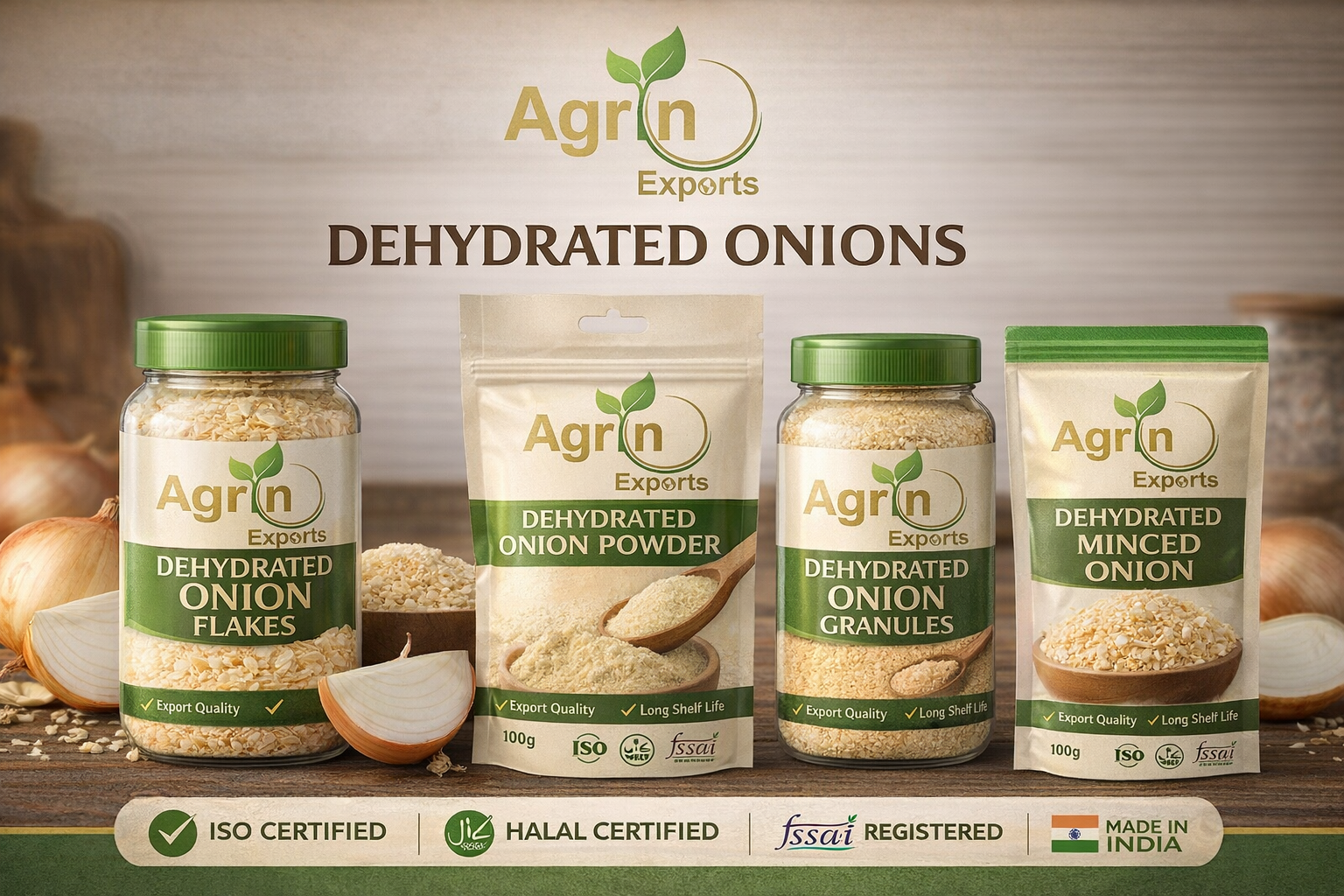
· Dehydrated onion flakes
· Dehydrated onion powder
· Dehydrated onion granules
· Chopped and minced onions
Each format serves specific industrial applications, from snack seasoning to ready-meal manufacturing.
Importance of Quality, Hygiene & Compliance
As global demand increases, buyers are becoming more selective. Importers now prioritize:
· Hygienic processing facilities
· Batch-to-batch consistency
· Traceability and documentation
· Export-compliant packaging
Suppliers that meet international food safety standards and demonstrate transparency gain long-term buyer trust.
India’s Strategic Role in the Global Supply Chain
India remains one of the most reliable sources of dehydrated onions due to:
· Abundant onion cultivation
· Cost-efficient processing capabilities
· Skilled labor and export infrastructure
As a result, dehydrated onion exporters from India are well positioned to meet rising global demand in 2026.
How AGRIN EXPORTS Meets Global Market Expectations
AGRIN EXPORTS is strategically aligned with global buyer requirements by offering:
· Export-quality dehydrated onion products
· Multiple packaging options (bulk & retail)
· Private label and custom branding solutions
· Market-specific compliance support
Our focus is not just supply—but building reliable, long-term partnerships with international importers and food manufacturers.
Conclusion
The global demand for dehydrated onions in 2026 is driven by efficiency, stability, and evolving food consumption patterns. As food industries worldwide seek dependable, shelf-stable ingredients, dehydrated onions will remain a core component of the global food ecosystem.
For importers looking for a trusted dehydrated onion supplier, partnering with an experienced exporter ensures consistent quality, timely delivery, and regulatory compliance.
📩 Contact AGRIN EXPORTS to explore sourcing opportunities for dehydrated onions tailored to your market.
+91 96014 21424
