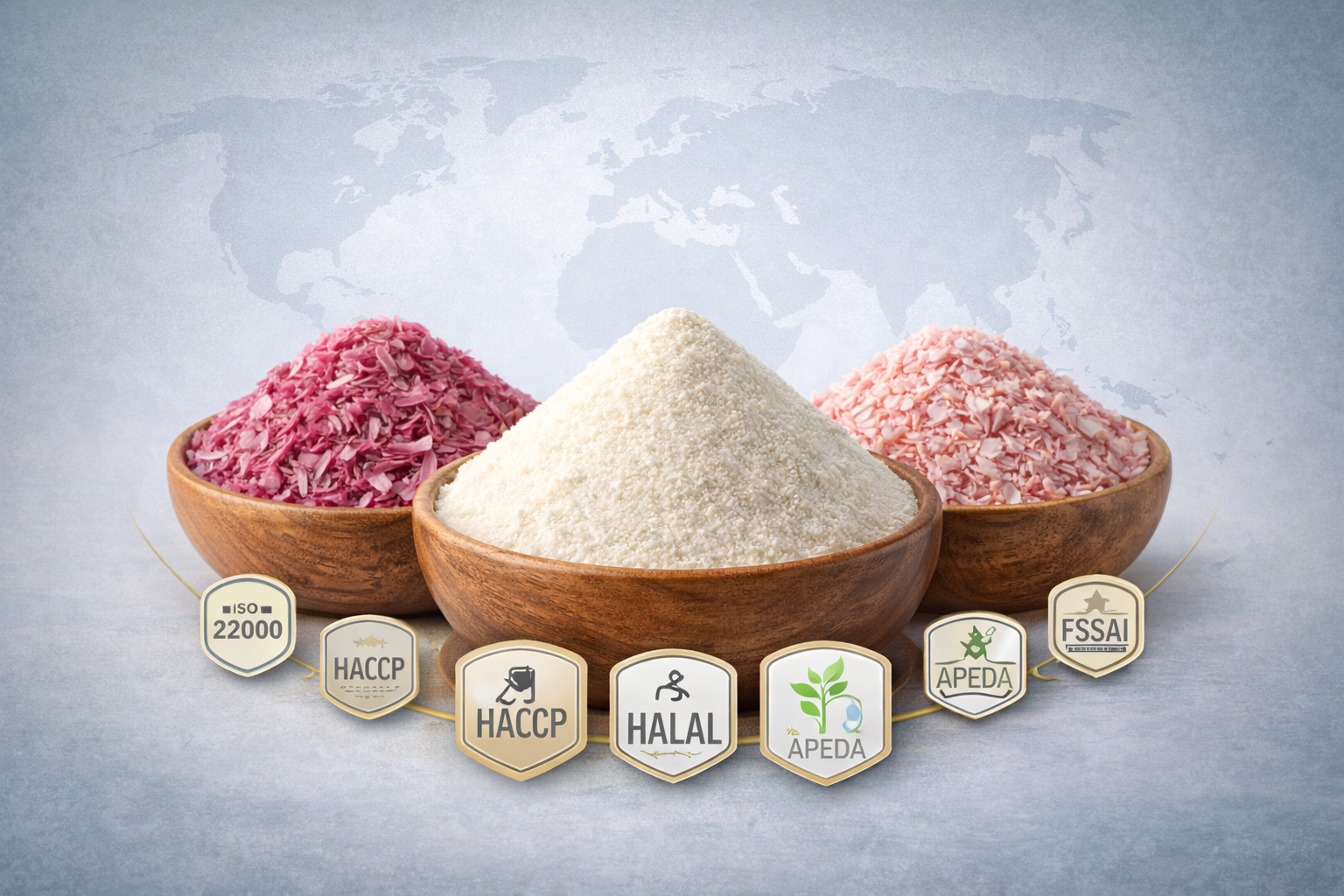
For importers in Indonesia, Malaysia, Australia, Vietnam, Nigeria, South Africa, Philippines, Iraq, Côte d'Ivoire, and New Zealand, sourcing dehydrated onions, garlic, and spices requires more than competitive pricing. Food safety certifications are your guarantee of quality, regulatory compliance, and supply chain security when importing from India or other global origins.
This comprehensive guide explains why certifications are critical for food ingredient imports across Asia-Pacific, Middle East, and African markets, and how they protect your business while meeting local regulatory requirements.
Understanding Food Safety Certifications in International Trade
When importing dehydrated vegetables and spices into countries like Australia, Malaysia, or South Africa, certifications serve as internationally recognized proof that suppliers follow strict quality and safety protocols. These documents are essential for customs clearance, regulatory compliance, and consumer protection across all major import markets.
For B2B buyers, food manufacturers, and distributors operating in Southeast Asia, the Middle East, Africa, and Oceania, proper certifications eliminate supply chain risks and ensure products meet both international standards and local food safety regulations specific to your country.
Critical Certifications for Importing Dehydrated Onions and Spices
ISO 22000: Global Food Safety Management Standard
ISO 22000 certification is recognized across all major import markets including Indonesia (BPOM requirements), Malaysia (MESTI compliance), Australia (FSANZ standards), Vietnam (VFA regulations), Nigeria (NAFDAC), South Africa (Department of Health), Philippines (FDA), Iraq (COSQC), and New Zealand (MPI requirements).
This certification demonstrates that your Indian supplier has implemented comprehensive food safety management systems covering the entire supply chain. For importers of dehydrated onions, garlic, and spices, ISO 22000 ensures consistent quality whether you're shipping to Jakarta, Kuala Lumpur, Sydney, Ho Chi Minh City, Lagos, Johannesburg, Manila, Baghdad, Abidjan, or Auckland.
HACCP: Essential for Asia-Pacific and African Markets
HACCP (Hazard Analysis and Critical Control Points) certification is mandatory or highly preferred in most Asia-Pacific markets. Australian importers must ensure suppliers have HACCP systems in place to meet FSANZ requirements. Malaysian buyers need HACCP certification for MESTI approval. New Zealand's MPI strongly emphasizes HACCP compliance for imported food ingredients.
For African markets like Nigeria and South Africa, HACCP certification streamlines NAFDAC and Department of Health approvals. In Southeast Asian countries including Vietnam, Philippines, and Indonesia, HACCP demonstrates systematic hazard prevention in dehydrated vegetable processing—critical for customs clearance and retail distribution.
Halal Certification: Critical for Muslim-Majority Markets
Halal certification is absolutely essential when importing dehydrated onions and spices into Indonesia, Malaysia, Iraq, Nigeria, and Côte d'Ivoire—countries with significant Muslim populations. Indonesia's BPOM and Malaysia's JAKIM require Halal certification for food ingredients used in consumer products.
For Philippine importers serving Muslim regions in Mindanao, Iraqi buyers supplying food manufacturers in Baghdad and Basra, and Nigerian distributors in northern states, Halal-certified dehydrated vegetables ensure market access and consumer acceptance. Even in markets like South Africa and Australia with growing Muslim populations, Halal certification expands distribution opportunities.
APEDA and FSSAI: India-Specific Certifications for Asian and African Importers
When sourcing dehydrated onions, garlic, and spices from India, APEDA (Agricultural and Processed Food Products Export Development Authority) registration and FSSAI (Food Safety and Standards Authority of India) certification provide additional quality assurance recognized across importing countries.
Australian quarantine authorities, New Zealand's MPI, Malaysian MESTI, and South African health departments recognize these Indian certifications as proof of government-regulated quality standards. For buyers in Vietnam, Philippines, Indonesia, Nigeria, Iraq, and Côte d'Ivoire, APEDA and FSSAI documentation supports customs processing and regulatory approval.
Country-Specific Import Requirements and Certification Benefits
Australia and New Zealand: Stringent Biosecurity and Food Safety Standards
Australian importers must comply with FSANZ (Food Standards Australia New Zealand) regulations and DAFF (Department of Agriculture, Fisheries and Forestry) biosecurity requirements. Dehydrated onion and spice imports require comprehensive documentation including certificates of analysis, phytosanitary certificates, and proof of HACCP compliance.
New Zealand's Ministry for Primary Industries (MPI) enforces equally strict import standards. Certified suppliers provide the documentation needed for smooth clearance through Australian ports (Sydney, Melbourne, Brisbane) and New Zealand entry points (Auckland, Wellington). ISO 22000 and HACCP certifications significantly reduce inspection delays and rejection risks.
Malaysia and Indonesia: ASEAN Food Safety Compliance
Malaysian importers must ensure products meet MESTI (Malaysian Standard on Food Safety according to HACCP) requirements. For dehydrated vegetables and spices entering Port Klang, Penang, or Johor Bahru, supplier certifications demonstrate compliance with Malaysian food safety regulations.
Indonesian buyers face BPOM (Badan Pengawas Obat dan Makanan) requirements for imported food ingredients. Halal certification is particularly critical in Indonesia, the world's largest Muslim-majority country. Certified dehydrated onions and spices streamline customs clearance at Jakarta's Tanjung Priok Port and Surabaya's Tanjung Perak Port while ensuring retail distribution approval.
Vietnam and Philippines: Growing Import Markets with Evolving Standards
Vietnam's VFA (Vietnam Food Administration) oversees food ingredient imports with increasing emphasis on international certifications. As Vietnamese food processing industries expand, buyers in Ho Chi Minh City and Hanoi prioritize suppliers with ISO 22000 and HACCP certifications for dehydrated vegetables and spices.
The Philippines FDA requires comprehensive documentation for food ingredient imports. Manila-based importers and food manufacturers in Cebu need certified suppliers to navigate regulatory approval efficiently. HACCP and ISO certifications expedite product registration and ensure compliance with Philippine food safety standards.
Nigeria and South Africa: African Market Leaders with Strict Import Controls
Nigerian importers must satisfy NAFDAC (National Agency for Food and Drug Administration and Control) requirements for all food ingredients. Lagos-based distributors importing dehydrated onions and spices benefit significantly from supplier certifications that demonstrate international quality standards.
South African buyers face Department of Health regulations and SABS (South African Bureau of Standards) compliance requirements. Certified Indian suppliers help Johannesburg and Durban importers meet these standards while ensuring product quality for food manufacturing and retail distribution across SADC markets.
Iraq and Côte d'Ivoire: Emerging Markets with Specific Requirements
Iraqi importers bringing dehydrated vegetables and spices through Umm Qasr Port or Basra must comply with COSQC (Central Organization for Standardization and Quality Control) regulations. Halal certification is essential, while ISO and HACCP certifications facilitate customs processing and regulatory approval.
Côte d'Ivoire's growing food processing sector in Abidjan increasingly demands certified food ingredients. Suppliers with international certifications help Ivorian importers meet both local regulations and the quality expectations of West African consumers.
How Certifications Protect Importers Across All Markets
Streamlined Customs Clearance in Every Country
Whether clearing customs in Sydney, Kuala Lumpur, Lagos, or Auckland, proper certifications expedite the process. Customs authorities across Asia, Africa, and Oceania require documented proof of food safety compliance. Certified suppliers provide the necessary paperwork to avoid shipment delays, additional inspections, or rejection at ports of entry.
For time-sensitive shipments of dehydrated onions and spices, certification documentation can mean the difference between smooth delivery and costly demurrage charges at container terminals in Jakarta, Manila, Johannesburg, or Ho Chi Minh City.
Quality Consistency for Food Manufacturers
Food manufacturers in Indonesia producing instant noodle seasonings, Malaysian companies making curry pastes, Australian processors creating soup mixes, and Nigerian businesses manufacturing bouillon cubes all require consistent ingredient quality. Certified suppliers implement standardized procedures ensuring every batch of dehydrated white onion powder, red onion flakes, or garlic granules meets identical specifications.
This consistency is crucial whether you're producing for local markets in Vietnam, export-oriented facilities in South Africa, or regional distribution from the Philippines. Certified dehydrated ingredients help maintain your finished product standards and brand reputation.
Risk Mitigation and Supply Chain Security
Supply chain disruptions affect businesses worldwide. For importers in New Zealand sourcing ingredients for remote market supply, Vietnamese buyers managing tight production schedules, or Iraqi distributors serving reconstruction markets, certified suppliers offer greater reliability and accountability.
Comprehensive traceability systems required by certifications enable quick resolution of any quality issues. This protection is valuable whether you're a distributor in Abidjan, a food manufacturer in Melbourne, or a spice packer in Karachi serving regional markets.
Market Access and Retail Distribution
Major retail chains across Asia-Pacific, Africa, and the Middle East increasingly require supplier certifications as a prerequisite for shelf placement. Whether you're supplying Woolworths in Australia, Giant in Malaysia, Shoprite in South Africa, or growing retail chains in Vietnam and Indonesia, certified ingredients support your market access.
For private label brands and food service distributors serving hotels, restaurants, and catering businesses across these regions, certifications provide the credibility needed to win contracts and maintain long-term partnerships.
Verifying Supplier Certifications: Practical Steps for Importers
When evaluating Indian exporters of dehydrated onions, garlic, and spices, verify certification authenticity through these steps:
Request Original Certificates: Obtain copies of ISO 22000, HACCP, Halal, APEDA, and FSSAI certificates. Check certification numbers, validity dates, issuing authorities, and scope of coverage.
Verify with Certification Bodies: Contact certification organizations directly to confirm authenticity. Reputable suppliers welcome this verification and provide necessary contact information.
Check Audit Frequency: Ensure suppliers undergo regular annual or bi-annual audits rather than one-time certifications. Ongoing compliance matters more than historical certification.
Review Lab Test Reports: Request recent microbiological test results, moisture content analysis, and contaminant screening reports specific to the products you plan to import.
Confirm Product Scope: Verify that certifications cover the specific dehydrated onion forms (flakes, powder, granules, minced, chopped) and product categories relevant to your business needs.
The Competitive Advantage of Certified Suppliers
Beyond regulatory compliance, working with certified exporters offers strategic advantages. Certified Indian suppliers of dehydrated onions and spices typically demonstrate:
Superior Quality Control: Systematic monitoring of processing parameters, storage conditions, and packaging standards ensures premium quality ingredients for your market.
Transparent Communication: Certified suppliers provide detailed product specifications, answer technical questions professionally, and maintain clear documentation practices.
Scalability and Reliability: Companies investing in certifications typically have the infrastructure and processes to handle growing order volumes while maintaining consistent quality.
Market Knowledge: Experienced certified exporters understand regional import requirements across different countries and can advise on documentation, packaging, and compliance matters specific to Indonesia, Malaysia, Australia, Vietnam, Nigeria, South Africa, Philippines, Iraq, Côte d'Ivoire, or New Zealand.
Selecting Your Certified Supplier: Key Evaluation Criteria
When choosing a supplier for dehydrated food ingredients, consider:
Certification Portfolio: Comprehensive certifications (ISO 22000, HACCP, Halal, APEDA, FSSAI) demonstrate serious commitment to quality and market access.
Export Experience: Suppliers with proven track records in your specific country understand local regulations, documentation requirements, and logistics challenges.
Product Range: Comprehensive offerings in various forms (flakes, powder, granules, minced, chopped) and onion types (white, red, pink) provide sourcing flexibility.
Customization Capabilities: Private labeling services, custom packaging options, and flexible order quantities support your business model.
Communication and Service: Responsive communication, technical support, and willingness to provide samples and documentation indicate professional operations.
Conclusion: Certifications as Your Import Security
For importers across Indonesia, Malaysia, Australia, Vietnam, Nigeria, South Africa, Philippines, Iraq, Côte d'Ivoire, and New Zealand, certifications are not optional extras—they are fundamental requirements for successful food ingredient imports. When sourcing dehydrated onions, garlic, and spices from India, partnering with certified suppliers protects your business, ensures regulatory compliance, and delivers the consistent quality your customers demand.
The right certified supplier becomes your long-term partner in growth, supporting your business objectives across changing markets and evolving regulations. Investment in certified sourcing relationships pays dividends through reduced risk, simplified compliance, and sustainable supply chain success.
Looking for a certified Indian exporter of premium dehydrated onions and spices? AGRIN EXPORTS serves importers across Asia, Africa, and Oceania with comprehensive certifications: ISO 22000, HACCP, Halal, APEDA, and FSSAI. We understand the specific import requirements of your market and provide complete documentation for smooth customs clearance.
AGRIN EXPORTS - Your Certified Sourcing Partner:
- Email: info@agrinexports.com | sales@agrinexports.com
- WhatsApp/Phone: +91-96014 21424
- Products: Dehydrated White, Red & Pink Onion | Dehydrated Garlic | Premium Indian Spices
- Forms Available: Flakes, Powder, Granules, Minced, Chopped, Kibbled
- Services: Bulk Export | Private Labeling | Custom Packaging | Global Logistics
- Website: www.agrinexports.com
Request product specifications, certification documents, and export quotation for your country today.
